Friday, September 26, 2014

Nurturing the Tree of Friendship (n.)


"Men have no more time to understand anything. They buy things all ready made at the shops. But there is no shop anywhere where one can buy friendship, and so men have no friends any more."  
—The Fox in The Little Prince1
Think for a moment of the most famous friendships in history and literature. What names come to mind? For me it is always King David and Jonathan; Frodo and Samwise; and Anne and Diana. In my own life there are nearly a dozen soul-knit friends, kindred spirits, whom God has seen fit to bring into the dark places when all other lights go out. Usually they come singly, but sometimes in pairs. Always they bring friendship in their hand like a gift
In Western culture we use the word "friend" to mean a number of relationships, from an acquaintance to a friend so close that our souls really do seem knit together, as the Scriptures say of David and Jonathan. My Kasey-friend is vastly more dear to me than my friend John, who happens to be our mailman at work. In a way, I am friends with both, and I am friendly towards both, but one can read my soul, be part of my soul, the other has no idea what the shape of my soul is. Beyond a sliding scale of what friendship means, we have social media influencing our understanding of "friends"—making a noun into a verb, and making you feel like you know a person because they update their status bar every day or every ten minutes. If I know what someone made for breakfast, the song they are listening to, and the quotation they re-posted, I still do not know their essence, their ousia, via their social media site. I know their being by living with them, working with them, arguing with them, getting sick of them, and still wanting to be around that person the very next hour or day. We learn someone's quirks, endearing habits, turns of phrase, and morals by living with them in the daily—at school, work, or home. I cannot "unfriend" my neighbour, I live with her. I cannot decide I only want to be friends when it is convenient, nor would I want my friends to treat me that way. Friendship is time-consuming and takes hard work. It is also gloriously fun, deeply personal, and enriching to one’s soul. Thus, I rebel at the co-opting of the word "friend" in social media, when its etymology is much richer: dear, beloved, to love, to woo.2 A friend is one who walks with us to Mordor, in spite of the deadly peril, believing always that we will return home together...Yet even if they lose hope that we will live beyond Mount Doom, they would never dream of leaving our side, choosing rather to carry us—and die with us if need be. A friend helps us to dream again when all our hopes have crashed to the ground. A real friend speaks truth to us when we are being snippy, selfish, or unrealistic—even at the cost of our annoyance or anger toward them at hearing that truth. We return friendship when we receive rebuke, shine the spotlight on our friend’s accomplishments—rather than seeking our own glory or downplaying theirs—and walk through the valley of the shadow in silence, hope, and companionship with them.
Said more succinctly and wisely, Friendship is an obstetric art; it draws out our richest and deepest resources; it unfolds the wings of our dreams and hidden indeterminate thoughts; it serves as a check on our judgements, tries out our new ideas, keeps up our ardor, and inflames our enthusiasm.”3
Friendship indeed does all these things and more. Surely only a handful of these infinitely valuable and intimate are ever granted in one whole lifetime. In ninety-nine out of one hundred cases I would say that is true; but sometimes that one hundredth person is given extra gifts. I am one who has been given an abundance of these gift-friendships. I could never earn them—and I certainly do not deserve them—but I do cherish them. It is sometimes difficult for me to make enough time to maintain all of these friendships, but none of us seem to mind when there is a gap of time between calls, walks, or letters. We pick up where we left off and begin to share our hearts at some point. This does not leave much room in my life for casual “friends”—whom I would call acquaintances. Yet every now and again, I have dinner or coffee with an acquaintance because they are still a valuable person, even if I cannot invest more time with them.
What I have discerned in our culture is that many persons seem to devote much of their time to their acquaintances, leaving themselves little or no time to invest in one of those Samwise and Frodo friendships. No wonder the most common answer I receive to “How are you?” anymore is not “fine” but “busy.” Work, meetings, coffee dates, and various events—along with films, television, and internet browsing—fill up all of our waking moments until we hide beneath the covers at night.
I purposely have to pick one to two evenings a week where I have no plans, where I am not scheduled to make dinner for anyone besides myself, drive somewhere, or run errands. Mostly I end up washing dishes, writing, reading, or going for walks on these evenings. If I am free, I am able to attend to my neighbour when she has had a bad day; or call one of my friends around the country to hear about their souls. To foster intertwining, deep friendships, we must be available. We will have to attend. We must learn to see beyond the surface, seeking to know not simply “How was your day?” but “What made it good or hard?” and “How are you?” as well. We have to listen to the answer, not merely hear it.

To cultivate rich friendship, like husbanding a vineyard, there are times when we have to cut off sucker shoots. Activities, the number of acquaintances we spend time with weekly or monthly, and having our computer or phone on can be sucker shoots. It is hard work to figure out which friendships one ought to pour into. Goodness knows I have invested heavily in some unwise acquaintanceships and too long ignored some close friends. My real friends have been gracious to receive me back again, even as my heart recovers from overextending myself in short-lived comradeship.

That said, it is worth taking the risk of being friends, being vulnerable, being loyal to someone. You should be able to tell a person’s character fairly early on if you spend much time around them. Likewise, they should be able to tell if you are trustworthy and faithful. Will you keep their secrets, or will you gossip? Will you hold them when they cry? Will you share your hard moments with them? Will you drop by unexpectedly and not care if their hair is a mess and they are in their comfy clothes with holes in them? Will you let them do the same with you? Do they bring strength and beauty into your life? Do you build them up behind their backs, before their peers, and in a whisper for their ear alone? Do they make you live in reality, yet encourage you to dream? Does your soul thrill at their hopes?
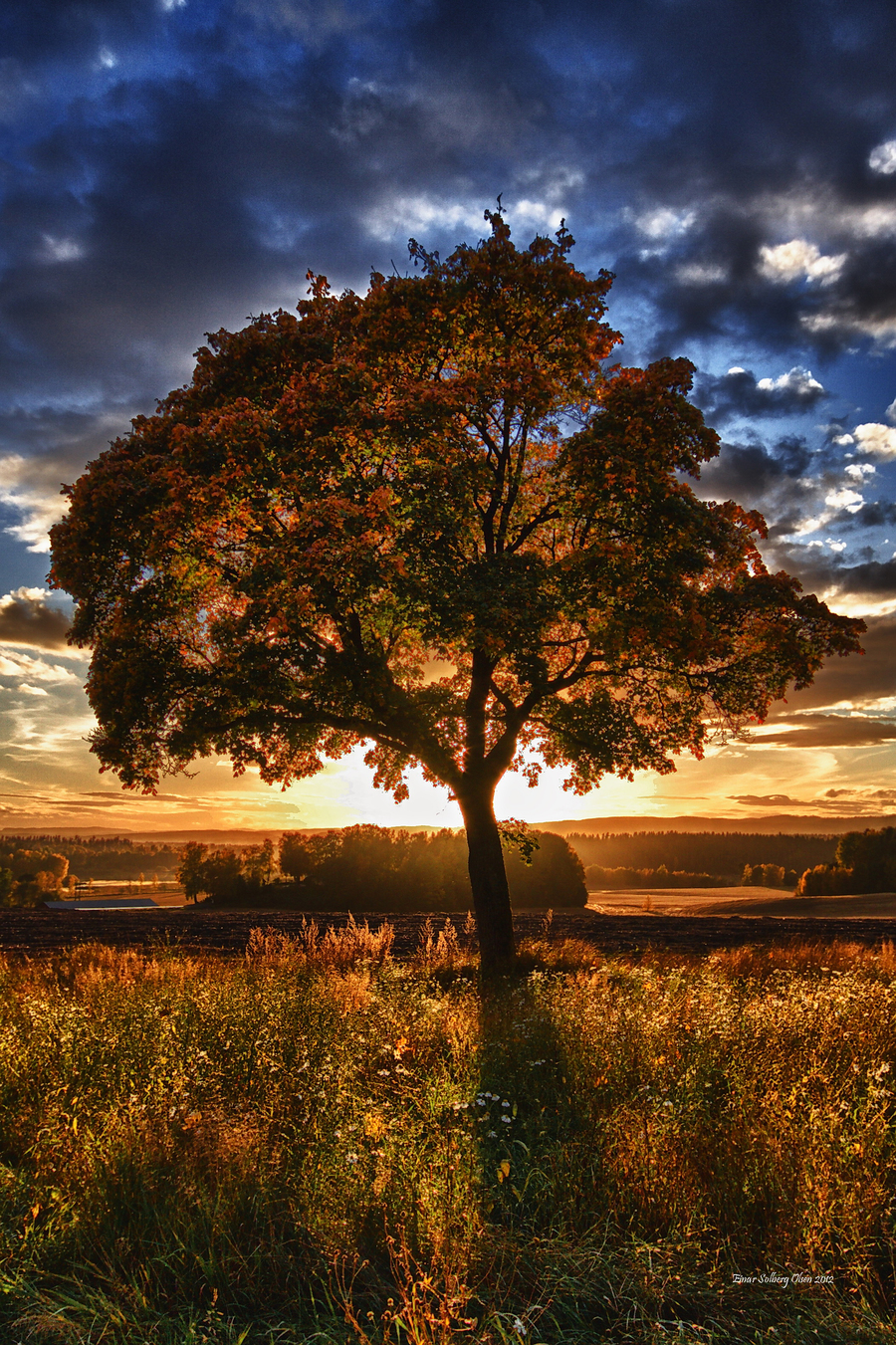
Friendship is a give and take, not using someone or smothering them with affection. Friendship is made of mundane things like grocery shopping and folding laundry. It is made of looking at sunsets and stars and sharing hopes and fears. There is camaraderie in drinking tea—or coffee, if you must—and just looking at the world together, not saying much. Friendship is indeed an art, a way of life, a choice, a gift. Like all gardens and fruit trees, some friendships have their seasons and then comes the Autumn. Let them go. Cherish the friendships that are like apple trees, blossoming in Spring, green in Summer, bearing fruit in Autumn, and bare in Winter … Yet blossoming in Spring again. Cultivate those, for friendship is the tree itself. 


~ Johanna

* I am writing above about same gender friendships. Male/female friendships do not work quite the same, unless it is within the bounds or marriage. Then it is even closer and richer than anything I have known or described. It is important to have friends of both sexes, but male/female friendships outside of marriage cannot share in the same depth as male/male or female/female friendships.

** Cross-posted at Conciliar Post

_____________________

1. de Saint-Exupery, Antoine The Little Prince (New York: Harcourt Brace Jovanovich, Inc., 1971) 67
2. Friend (n.) Online Etymology Dictionary, © 2001-2014 Douglas Harper
3. Sertillanges, A. G. The Intellectual Life (Washington D. C., Catholic University of America Press, 1998) 56


Saturday, September 20, 2014

Being Italian for a Day

Today I stepped back in time and took life at a slower pace. For nearly seven hours I was given the gift of being Italian. 

It all began about a year ago when our (then) new accountant kept telling those of us in the office about "tomato day". She and her husband would go to the fields and pick bushels of tomatoes. They would save them for a week to make sure they were really ripe. Then began the process of turning those tomatoes into a year's worth of pasta sauce. Many a time I have sampled minestrone, Italian vegetable soup, and so forth imbued in the goodness of this homemade sauce. Today I was given the opportunity to join in the labour of the fruits.

Three of us from the village arrived at Sue and Blake's house around nine in the morning. We petted the dog, washed our hands, met some family, and jumped in to the fray. Soon we were slicing onions in great big quarter chunks and learning how to peel garlic by shaking it inside two metal bowls (this actually works, you should try it). I also encountered a wooden spoon longer than my leg, which is impressive, because my legs are the longest part of me. When all was said, sliced, and done, we had four bushels of tomatoes, six onions, two bulbs of garlic, and two large containers of basil simmering over the camp stove in a collective eighty quarts. If you have never seen a twenty quart pot, you may not realise how massive it is compared to whatever normal persons use for cooking. However, the twenty quart pot was significantly dwarfed by the sixty quart pot and the spoon the size of Reepicheep's coracle paddle. Perhaps a photo will help illustrate my point:


See, doesn't the twenty quart pot look like your everyday sort of soup pot? Unless you normally feed an army, however, that pot was by no means everyday-ish. 

We stirred and squashed tomatoes for a few hours. We ate lunch. We petted Verona some more. Finally, the tomatoes began to boil into a rich red, aromatic fervour. We washed our hands, set up the press, gathered pots and buckets, and formed an assembly-line. Blake said "go!" and we began. Amanda poured the boiling hot tomato mixture into the wide funnel, I pressed it down with the plunger, and Sue cleared the skins and debris as they filled the flat "catcher". Those skins and onions and basil leaves went back into the press's funnel—we wanted all that flavour! Then they were removed to the rubbish. Various splatterings and eruptions left us with orangey splotches on our arms, feet, jeans, and shirts. Blake kept bringing pots and pans to catch the juices and thick sauce. We filled four different containers with that crimson, delicious-smelling sauce. Then back into those huge pots it went for an hour to boil out any bacteria. 


We stirred continuously to prevent burning the sauce. We set up the table with jar after jar—over sixty of them. Blake boiled the lids to ensure a good seal. Sue took soundings with the thermometer—we had to hit 180ยบ. We let the sauce "percolate" there for about half an hour. Out came the silver funnel for filling small mouth jars. Out came ladles and glass measuring cups with pour spouts. Next came the empty boxes to put the finished jars in for safe-keeping. Over came the neighbour girl to help wipe around the jar tops to make sure they sealed well. All was set... Then Blake said, "Go!" and we were in full swing. Clear jar after clear jar was filled with hot, pungent, tomato sauce. Red jar after red jar was passed to me to put in the empty boxes. In a matter of minutes sixty-two empty jars were full and sitting in their cardboard casings on the counter.


The dishes were washed and drip-drying; the delightful "pop!" of the seals was beginning; and four tired persons were grinning at the success of the day. We had made legitimate Sicilian tomato sauce with a recipe and process passed down from Blake's grandparents. We had been swashed in hot red juices and remained standing. We had picked up nearly all the parts and pieces... And it wasn't even four o'clock yet.

It felt good to stir hot sauce on a cool Autumn day. It was rewarding to slow down and make the year's supply of sauce, rather than buying that processed stuff from the grocery. I was reminded of all those times growing up when my mother, sisters, and I cut, cooked, mashed,  pressed, and strained apples for applesauce. I remember crisp days, sweet smells, and very tired arms from hand cranking that machine. But the satisfaction at the end of the day in making one's own food with one's own produce and labours was just the same. There is something to be said for making things rather than buying them.

There is a sweet satisfaction a a job well-done. There is camaraderie, fellowship, and working together in the process. You get to know stories you might never have heard were you not using an oar to paddle red sauce over open flames. You learn more about your friends and family, your skills and others', by working together. And you have to take life slowly when you're watching a sixty quart pot of tomatoes boiling. I'm glad I was allowed to be Italian for the day.


~ Johanna

Sunday, August 31, 2014

Without Injuring Eternity


You say grace before meals.
All right.
But I say grace before the concert and the opera,
And grace before the play and pantomime,
And grace before I open a book,
And grace before sketching, painting,
Swimming, fencing, boxing, walking, playing, dancing;
And grace before I dip the pen in the ink.
1 
―G.K. Chesterton
23 August

Yesterday I woke to a pink, cloud-studded sky. I smiled at the rose-grey dawn and pulled the blankets a little closer to enjoy the early morning from my bed. My smile grew as I realised that it was Saturday. Quite by plan, Saturdays are my "solitude days." As tourists crowd the sidewalks, crosswalks, pubs, and coffee shops in my little town, I pull away from the world for a day. There is no schedule for these days, nothing pulling or pushing me toward itself. I often bake or do housework, as there is joy and satisfaction in the work of one's hands. Usually I read, write, and and mute my phone.

This day I rose to read a bit over breakfast. As usual, my phone was on silent; when I looked at it for the time, I saw I had five or six missed calls and a couple of voicemails. A friend asking me a quick favour, no problem. Another friend in town, wanting to know what I was doing for the day. The morning calm, leisure, and quiet broke into feeling restless and harried. Just the day before, as I was about to eat brunch, a friend knocked on my door, coming by to chat for an hour. I had the sinking feeling that this was about to happen again and I wanted nothing more than an uninterrupted day of solitude. In that moment I decided to run away.

I let my friend know I was unavailable for the day, packed a lunch, grabbed my hiking shoes and keys, and drove off into the late Summer day. Thirty minutes later—and three thousand feet higher—I was ready for a hike in the mountains ending in a fen. I had no set course, thus general tromping employed me for a while. When my stomach complained that it was empty, I settled on a flat boulder in the side of the hill to eat and be still. The wind whirled up from the pines, tickling the hair around my neck; its river-rushing roar filled my ears, quickened my blood. A pair of rooks were rising on the same draft of air, coal-black against shining white clouds in the deep, dark blue sky. The warm odour of sunshine-infused pine filled my lungs. Ants crawled around me. When the wind broke its run, there was a silence at once full and empty. Empty of sound, yet expectant and weighty upon my soul.

Closing my eyes, I let the afternoon sunshine and stillness sweep over me to freckle my skin and quiet my heart. I left chronos* time, the time of ticking seconds, and entered into kairos, the time of eternity. Kairos, the time of being without feeling the constraint of time. I may have been on that rock for ten minutes or an hour, just listening to the silence. Before returning to the path, I read a few pages of Walden and was arrested by the line: "As if you could kill time without injuring eternity!"2 Bubbling up within me was an exultant "yes!" to something that has vexed me for years. Like being "only human" or getting general studies "out of the way," the phrase "killing time" grates on my heart. God made us to be fully human. General studies are the strong foundation for a narrowed field. And time, time cannot be killed "without injuring eternity!" Though I disagreed with the next few pages of Thoreau's treatise, that little line rang a resounding bell of truth inside of me. 

We do injure eternity often, I realised as I rambled along the path. It is not that we must be employed in charitable deeds every waking moment, or that our leisure must be spent only in reading great literature, or some other legalism of that sort. No, we injure eternity more widely and subtly than  by outright sin. We live in fragments, sound bites, and megabytes. Our attention is constantly divided from one tab to the next, from a person's face to the screen of our "device", from our task at work or around the house to our e-mail. Whole software and websites exist to make sure we have constant variety in our music, going from slow to fast in the matter of three seconds, our moods changing just as rapidly. I am not a complete luddite, as I am typing these thoughts via my macbook. I have switched tabs to look up various things and even abandoned writing altogether several times since beginning. I am not free from this disintegration of thoughts and actions, but I am often repulsed by how technology supplants reality.

A question I once read has resurfaced in my thoughts many a time since its introduction: If you have fifteen free minutes how do you use them? Perhaps I would answer that I clean around my house, wash the dishes, read, sit on my porch, or say hullo to my neighbour... But more often, I flip open my computer to check my e-mail and the weather for the tenth time. I do not intend to write an e-mail to anyone, mind you, I simply want to see if anyone has written to me. I am decidedly the centre of my own universe in those fifteen minutes. If I choose to do a few chores or look at the sunlight on the leaves or greet my neighbour, I am often removed from myself into thinking of others, into thanking God for Beauty. I am forced out of chronos into kairos—out of the immediate, pressing time into the unhindered eternity. When my thoughts are scattered and disoriented, I do violence to eternity. Rather than bringing God's Kingdom (as Jesus exhorts in the Lord's Prayer), I seek only my own.

These thoughts were budding as I tramped on through filtered sunlight. I turned onto a loop never taken before, deciding to see new things. There was no spectacular view, though there was plenty of fuzzy green moss and a small rabbit with wide eyes. As I set one foot in front of the other, I realised that there is hope and abundant life ahead of me. There are the familiar ways and new paths to travel, much like my hike that very moment. Disappointed expectations sometimes derail me from this truth. Yet I am learning to lay down those dying expectations in order to pick up the gifts I have been given for this time, in this place. I am learning to give thanks in all things.3

When I reached the end of the circuit, I sat on a log looking out at the Pikes Peak mountain system. There are several smaller peaks and various rock formations within the one mountain, and I have yet to tire of the spectacular view. Pulling out my notebook and ink pen, I began listing the things I was thankful for that day. Memories pulled me out of that place and I saw neither the mountains or the trees. Forty or more lines were filled with gratitude. The sun slanted and I knew that kairos and chronos were somehow mixing in a precarious, wild dance. I was both outside and inside time. In that place, yet in my memory. In that moment, but in eternity, too. The giving of thanks for the graces given set me on the edge of time, like a knife blade—not slicing asunder—rather, thin enough to touch. This was where time and eternity met and kissed. As I remembered, as I gave thanks, the Kingdom of God was made a little fuller on earth, as it is in Heaven.** As I received the Beauty of that day, as I prayed often for open eyes and an open heart on that hike, God's Kingdom was enlarged in me—through me.

Nature, as Wordsworth, Thoreau, and others thought, is not an end in itself. It cannot save us from the ills of men, for it too is affected by the Fall. But Beauty—in nature, through art, in words, through music—does something to us. Beauty baptises our imaginations, breathes life into our souls. Thanksgiving joins chronos with kairos, now with eternity. Memory pieces together fragments into mosaics, full pictures of not just our story, but God's Story. Good days, dark nights of the soul, big events, every day graces, tears, laughter, all are fitted together precisely to shade and illuminate the living, shimmering image of God's Story. When we take time to remember, when we let Beauty lead us to worship and give thanks, God's Kingdom is flung abroad more fully on earth, as it is in Heaven. It is where God fills us with His Spirit—where He lives and moves and has His being in us.4 This is the Kingdom arriving. 


*For more on chronos and kairos see Walking on Water: Reflections on Faith and Art by Madeleine L'Engle
** For more on the Kingdom of Heaven coming to earth, see Surprised by Hope by N. T. Wright
__________________________

1. Chesterton, G. K. "A Grace" in The Collected Works of G. K. Chesterton (San Francisco: Ignatius Press, 1994), 43
2. Thoreau, Henry David Walden (New York: Signet Classics, 1999), 5

Tuesday, August 26, 2014

Rain-glory


Yet again the eaves are drip-drip–dropping, and thunder throbs above the clouds. Rain scent falls, hushes the neighbour children, and breathes its sweetness in at my open windowpane. Pattering droplets sing their song slowly today, and my heart is glad. Glad for slow rain to cool the day. For dark clouds brooding over the mountains, so I might see their creases and lines differently, like an ever-changing face on those long-standing rocks. 

If you ask me, the glory of Summer is not sunshine, but storm clouds. Rain makes me want to shirk my work more than any other Summer attraction. I want to write, to read, to sit on my porch feeling the keen wind waken my soul. There is a holy mystery in the shroud laid over the far foothills. Wet pine is the incense of this moment, the fragrance lifting my senses to the Storm-maker. With the first crack of thunder I throw off the torpid stupor of Summer heat and come alive. Suddenly, all my senses are engaged, awake.  

Rain is a revival of the earth and of the soul. It is life and drink to a thirsty ground, a communion of the heavens and the earth. Perhaps the mystery behind the silver veil made by sheets of rain, the incense of rain and pine, the eyes dazzled by lightning, the earth beneath my feet shaken by thunder, and the cool wind rushing over me engage my whole self in revival. Like the holy mysteries of bread and wine, the scent of smoking incense, the act of kneeling in prayer, and eyes drawn to the cross at the altar bring my whole body to worship, repentance, and renewal. 

Like a lightning bolt to the heart, I see it: I love rain because it leads me to worship. Rain stills my soul and quickens my creativity because it affects all of my self. Those icy droplets, fresh wind, solemn thunder claps, and the life showered on the earth are a reflection, a pantomime, of my worship and communion at church. Ah! Rain really is the glory of Summer. The glory and communion of this season. Each season has its own reflection of the worship service, of communion, of coming alive. Even the Autumn and Winter speak of death as but a precursor to new life. 

I inhale the scent of wet earth. I feel the flecks of cold water in the breeze. I rock gently with the thunder's thrumming. I peer through the veil of rain at shadowy wonders. And I give thanks to God for watering the earth and the flowers and the trees. I give thanks that wildfires are not ravaging the foothills. I give thanks for the break from the heat. I smile in joy, just listening to the rain. It is the worship service of the Summer, and I am invited. I attend.

Sunday, August 10, 2014

Only Human?


Imagine you are conversing with someone—a barista, the mailman, your mom, a close friend—and the conversation turns to an error that person made and they say, "Oh that mistake was a doozy! But I'm only human." They might even grin and shrug it away, chattering on as before. In fact, you may have made this very remark yourself at some point. If so, stop it. 

You and I are human beings. Our humanity is not an excuse—it is who and what we are. Not only human or merely human, but human in an of itself. As Aslan once explained, “You come of the Lord Adam and the Lady Eve... And that is both honour enough to erect the head of the poorest beggar, and shame enough to bow the shoulders of the greatest emperor on earth. Be content.”1

Be content—we were made in the image and likeness of God.2 As such, we are distinct from every other creature in existence. We were made to be fully human—that is not a flaw, it is our rรดle. We do not need to become less human, but more. All persons are shattered by the Fall, torn to bits and fragments of humanity. We are often more capable of being inhumane (sub-human, if you like) than we are of being human. Restoration of humanity means being completely human.

Someone might  inquire, doesn't the Bible say that we should decrease and God should increase in us?3 How does that point to us needing to be more human not less? Perhaps that is a misinterpretation of John the Baptist's statement, yet it raises a worthy point. If we are made in God's likeness, then we should be like God. Where do we take cues on how to be more like God? In the person of Jesus Christ. Jesus was the fullness of God in human flesh, but He was also the fullness of humanity in that sun-scorched skin.

Colossians two says it this way: "For in Him [Christ] dwells all the fullness of the Godhead bodily; and you are complete in Him..."4 I swim in waters far over my head when I begin thinking of "the fullness of the Godhead", but there that fullness is, in the person of Jesus. Further, we are completed in Him, made full in Him. We do not contain the fullness of the Godhead, we are too finite for that—but we can become completely human in Christ. I leave you to wrestle with the Scriptures in how to become more like Christ. I tremble before the Spirit of God as He sets my fractured soul in a myriad of places. Being made whole hurts, but it is good. Let us be content in nothing short of being human.


_____________________

1. Lewis, C. S., Prince Caspian

2. Genesis 1:26 (NKJV)
https://www.biblegateway.com/passage/?search=Gen+1%3A26&version=NKJV

3. John 3:30 (NKJV)
https://www.biblegateway.com/passage/?search=John+3%3A30&version=NKJV

4. Colossians 2:9-10a (NKJV)
https://www.biblegateway.com/passage/?search=col+2%3A9-10&version=NKJV

Tuesday, July 15, 2014

The Fog of Holy Mystery

What do you think of when you hear the phrase 'holy mystery'? Desert mystics wandering in flowing robes? Gilded saints on chapel ceilings? Incense streaming toward Heaven? I confess to having barely a vague knowledge of the mystery of the Divine. Holy mysteries are inchoate ideas at best, dark shadows in my head at most – nothing substantial enough to put into words. 

Today, however, I began to understand that holy mysteries are something akin to the fog filling up the bowl of the valley, pouring in over the lip of the foothills. The veil of mist hides familiar mesas and canyons. I know something of what is behind the veil from seeing the low hills on clear days. Perhaps holy mysteries are something like that, where most days all I see through the fog are blunted edges and shapes fading into grey. Then, for a moment, the clouds swirl up and I can see more clearly what is really there, only to be enveloped again the next minute. Knowing God is like that, moments of clearly seeing beyond the edge of the fog, seeing the substance further in, and then the shade descends again.

In other ways, I know the mystery of the Divine like a solitary bird flying off into the mist, its lone cry echoing back my heart's. Winging its way along it is swallowed by the depths and layers of cloud. I wonder if it will find a flock to join, or a place to rest its weary wings. So, too, I muse whether I will be able to rest my fainting soul, or find a flock with whom I fit. Or will I just fly into the grey and be lost? Is there anything real beyond what I can see? In the swirling moments I believe there is, because I have seen the shapes become solid. Yet, even when the mist o'ershadows the mountains I know by Beauty and by sense that there is more. More than the glimpses. Things more real than I can see or touch. I don't know how I know, but I do. Ah! There it is, the divine mystery: Beauty moves us toward the reality so real that we can only see shadows of it now. One day we shall see it –see Him– face to face.

For a moment the slow-pouring fog shifts and I know that when I want to enter into Beauty itself – when I want to be the sunset, or the symphony swelling, or the seagull on the wing – those aching moments are when the Divine pierces to my heart, like a shaft of sun through a storm cloud. I still cannot see what is to come, but I know the sun is there, and there are solid things beyond the shrouding mist. 

The beauty of this world is like layer upon layer of dark fog and storm clouds, melting the edges of evening into night. But the Beauty of the world beyond, the world to come, the redeemed world will be the crisp lines of leaf edges against a blue sky, of dappling shade, of falling leaves and sifting snow, of a forest of firs, and rocks upon rocks to climb and feel and see. It will be more, different, deeper. It will be like a keen wind in our lungs. We will be wonderstruck, as if seeing silver stars for the very first time. It will be layer upon layer of real... And there will still be those thin stratus clouds all salmon and coral and purple at sunset. The Divine will be fleshed out, walking among us again, and we will be new and able to see

~ Johanna


Saturday, July 5, 2014

Independence Day Above the Clouds

On the Fourth of July I donned red, white, and blue. My 'roommates' and I had a picnic on my bed. I watched fireworks. It was a relaxing and subdued affair...


But on the fifth of July, Zach, Marit, and I traversed to Woodland Park for the Symphony Above the Clouds celebration...


Zach scouted out our seats for us, and then went off exploring. Pretty soon he came back to tell us that he had found the canons for the 1812 Overture. So we stumped off to see them...


When we came back to our blanket, who had planted themselves next to us in that vast array of people? None other than most of the Myers family!


While they ate their supper, we took turns reading from The Old Squire's Farm, a story called 'An Embarrassing 4th of July'. 


Then we all decided to go look at the canons and move our blankets by the stage next to them, so we could see them when they fired later on. One of the servicemen was kind enough to explain how the canons worked, and even took one apart so we could see how it loaded. The canons were last used in WWII, and each would have been pulled by four mules.


 We listened to Celtic music as the sun went down, its final rays illuminating Pikes Peak in a gentle golden-orange light. 


Then came the orchestra, to play all sorts of Patriotic ensembles and some modern music (from Frozen and Star Wars to the Beatles and the Music Man). This is us listening to the symphony (yes, Marit made that awesome-sauce Lego necklace - she makes earrings, too):


In vain have I attempted to upload the video of the canons firing during a practise run... Alas, I cannot get it to work. Know that it was ear-splitting and grand. 


I may have been dressed for Independence Day on the fourth, but I felt American–and proud to be so–on the fifth. Being with the Myers family (and Zach and Marit, who are like siblings), reading an old-fashioned story, the smell of hotdogs on the grill, the sound of children running 'round, the sulphur scent of the canons, and the sinking golden sun–all surrounded by patriotic music and fireworks–felt like home.

~ Johanna


Saturday, June 21, 2014

A Shell Dishabited

The rumble of thunder reverberates off the foothills. Damp pine-scent laces the air. A trio of squirrels seek refuge in the spruce that touches the sky with its tip-top branches. This is the stillness of the very first Summer Saturday–my day of solitude and sleep, of caramel-filled chocolate and endless mugs of PG Tips. It is a fairy sort of daylight, ripe for reading Fantasties or Lord of the Rings. I can see sunlight slanting through the clouds, glancing off the whiskers of one of those squirrels. His dew-bright eyes are full of curiosity and mischief. 

O me! That I get to live in this world, to see with my two green iris-eyes the wonders of this day. To sniff up the fresh sweetness of the earthy pines. To hear the chirrup of birds, the clash between thunder and lightning, and the drip, drip, drop of the rain-song. I am given the gift of a cool breath of air, kissing my neck, swirling my honey-red hair. It is all balm for my soul after this labour-intensive week at work, after hard news. How can anything post-Fall still ring of Truth and Beauty? But it does. How can the creation still shout of God's glory when lives are sticky, shattered, crumpled messes? Yet it does!

My aching limbs are full of tired. My soul is searing-hot with pain of a different sort, for a loved one, and another, and still more. My prayers climb to the heavens, fly beyond the clouds to the ever-listening ears of the Father. No longer is weariness confined to muscles, it sinks its shaft far into my very being. Prayer presses deeper the helpless feeling, the weakness I walk daily. I feel emptier still... And then the rain comes. Splattering on the shingles, splashing on the glossy green leaves. The rain flows down to the thirsty earth, giving itself with joy. The droplets sink lower and lower still, into the dark red earth, into the deep fir roots. Those pines reach higher to brush the skies. The higher cannot stand without the lower,* whispers each drop. The higher cannot stand without the lower!,* sings the spicy fragrance of pine needles, wafting upward. The dark clouds empty themselves of rain, that the dusty earth might be refreshed again.

Is that it, Lord? my heart queries. Must You empty me of all of me so that I might be full of only You? And once I am full of You, will You pour Yourself out on others? Empty. Full. Cracked and broken to spill out the kindness of God, lavishly gifted to me. I cannot hold it in, like the rainclouds cannot hold the rain. I cannot keep it to myself, like a stagnant pool. God's loving-kindness is poured out on undeserving me. To keep it from stagnation, it must flow out from me to others. It is not earned, it is given with joy. It cannot be kept, it cascades down in delight.

A poem comes to mind about this emptying and filling. It reminds me that if I am replete with myself there is no room for God to fill me, no place for Him to overflow in my life: 

If thou could'st empty all thyself of self, 
Like to a shell dishabited, 
Then might He find thee on the ocean shelf, 
And say, 'This is not dead', And fill thee with Himself instead.
But thou art all replete with very thou
And hast such shrewd activity, 
That when He comes, He says, 'This is enow
Unto itself - 'twere better let it be,
It is so small and full, there is no room for me.' **

What if the thunder, full of itself, did not roar the echo of power from the Creator? What if birds decided to sing their own dissonant song and could not communicate with others of their kind? What if squirrels ceased being squirrelly? And what if the ground decided it was too full of tree roots and the firs came crashing down? If nature began to do as it pleased, rather than living by God-given instincts, chaos would ensue. So what do I expect to happen if I am replete with very me? Can God fill me with His loving-kindness if I am already full of self? Will I be able to shower others with His goodness if I cannot receive it? Certainly not! I must be empty so He can fill me. God pays me–pays all of His children–the great compliment of accomplishing His will and work through me–through usif we will let Him. 

I want to be like the rain falling deep into earth's heart; to be a shell dishabited. Going low to make others tall. Overflowing. Empty. Ready to be filled, to let my life be the sweet aroma of Christ in me, the Hope of glory.***

~ Johanna


______________________

 * Thomas รก Kempis, The Imitation of Christ: Being Thankful for God's Grace
** Sir Thomas Browne, If Thou Could'st Empty All Thyself of Self
*** Colossians 1:27 (NKJV)

Monday, June 16, 2014

New Arrival: The Conciliar Post

I am very pleased to announce the launch of a website called the Conciliar Post. This blog is comprised of persons from various church traditions who have come together to discuss life, death, worship, art, books, personhood, education, work, orthodoxy, and their beliefs about various social and church issues. Several of the authors are personal friends from my Oxford experience. The articles–by and large–are well written, witty, and thoughtful. 

My favourite article to date is a piece by Stephen Sutherland about current trends in worship. He begins his post thus: "Certain modern expressions of Christianity exhibit a knack for appropriating, or producing cheap knockoffs of, current cultural trends. There’s money to be made from “Christian” music, movies, novels, comic books, mints, and others I likely have not heard of yet. Less materialistically (and less cynically) there is an opportunity to redeem various parts of their culture, although how abstract concepts of “art” or “entertainment” can be redeemed, and how fallen man, incapable of redeeming himself, could redeem something else, remains murky."

You may also note on the authors page that I have graciously been included in the council of writers for this venture. Though I feel a bit out of my league, I am grateful to be given the opportunity to write for a wider audience, to share the gift God has given me in a new venue. It is a challenge already for me to stick with a writing schedule, and I fear that writing may begin to feel like work rather than a creative outlet... But writing is work. When I sit down to type, I often look up three paragraphs later and find that an hour has disappeared. By the time the final sentence is in place, two or three hours may have run their course. Then comes the hard part: editing and hunting through the thesaurus to find just the right word for this or that sentence. The challenge is good and will help hone my ability to write–or so I fervently hope!

Back to the CP blog. If you are a word addict like I am, you may be wondering about the definition and etymology of the word 'conciliar'. Well, if you are truly a word addict, you already know these things. I am still a novice addict, so I had to do some research. Here is how founder, Ben Cabe, explains the name of the blog on the about page: 
Conciliar comes from the English word “council” (persons convened for deliberation) and Latin “consilium” (assembly, consultation). Historically, “conciliar” has been used in reference to the great ecumenical councils of the Christian tradition. In everyday language it designates a gathering of Christians for the purpose of serious reflection upon matters of theological importance. The name Conciliar Post designates this site as a place for serious and faithful dialogue about significant issues in our world.

Interested? Please head over the Conciliar Post website to read an article or two. I think you will be pleasantly surprised by the variety of topics, scholarship, and adroit writing presented.

~ Johanna


Tuesday, June 10, 2014

Treading the Sea of Darkness

Noisy chatter clutters the lobby. The porch overflows with sound, seeping from every crevice of the hotel, like grapes, crushed. And I? I feel alone. Wearing the mask of a smile, while my soul wrestles with the Fall. I slip out into the rain-cooled air, the cloak of night hiding me from peering eyes and piercing laughter. 

How many times have I sat in a crowd of persons, even those I know, and felt the icy tentacles of loneliness? How often have I painted a smile on my lips, yet my eyes are belied by tears? Can I number the times I have listened to another's excitement while holding in my sorrows? How often have I concealed my joy in the face of someone else's pain? I do not begrudge those emotionally mixed moments. I do not regret that I have the privilege of of weeping and rejoicing with others. Nor am I deeply hurt that only a few look carefully into my honest eyes to see what is inside. Then I wonder, how many times have I not looked closely at bloodshot eyes? How often am I so lost in my own life that I neglect the trials and joys beneath the surface in others? 

This is the Fall–this neglect of others–written large and painted in bold black. The Fall, that locks us within ourselves, isolating us from God and man. The Fall, so murky and deep as to drown us in its depths. It is the Fall that prevents us from seeing life as a whole. We see only bits and pieces of our own lives—of others' lives—and we think those slivers are the whole story. We slosh in the muck of those black-sodden brushstrokes, seeing only a tary mess as far as our eye-scope can reach. 'This isn't how the story is supposed to go', we whisper fiercely to ourselves, kicking to stay afloat. 

But how is the story supposed to go? We think we have a decent plot. 'In the end this would bring God praise. Isn't that good? Isn't that the goal?' We do not see that the darkness of sin has been made the paint for the brush, the ink for the pen. The viscous stream in which we are drowning is the ink, undried. All the harrowing horrors of the Fall that dig their claws into our hearts, our homes, and our heroes have been ground into charcoal-hued pigment, brushing letters on parchment. Our grandiose plots for how our story should go are so small they are invisible upon the page. We swim in the depths of merely one letter, thinking it is our entire story. The Author and Finisher of our faith sees our script from the right perspective, much bigger–yet humbler–than we ever dared to dream or hope. 

Just because God allows us to be free agents in the writing does not mean that we are the author. Though He gives us the intolerable compliment of using our hands, our lips to accomplish His purposes, it does not follow that we know how immense the story, how deep the brokenness–and deeper still the redemption. We do not know how those letters, words, paragraphs, plots and subplots are being woven together to form a far-reaching tale. A true tale, meant for all the world, not only our corner of it, in this place and time.

What about the days when the narrative is dark, when we have tread the turbid waters of the Fall so long that we cannot muster another kick? Will the waves overflow us after all? God forbid! I say this fervently, yet, I am not the one abandoned by my husband. I am not left fatherless. I am not the one cast out by my family for doing the right thing. I do not have to face the long road of loneliness ahead if no reconciliation comes. No, but I can walk alongside my friends in those dark places. When they cannot tread thick waters any longer, I can hold them and swim for them. When I tire, it will be another's turn to support them. This is the body of Jesus, working together toward whole-ness, toward holiness. This one dark letter is not all that is on the page, it is not the whole story, though we or others may stick fast in one place far longer than we thought possible.

I still want to hide the holes in my soul, punctured by the Fall. I want to hide my own sin. I want to run away from the pain that the sins of others have caused me, my family, and my friends. I want life to be full of good things that are delightful and do not wound. But what I need it not to hide, is not isolation. What I need—what we all need—is for 'the light to shine in the darkness, and the darkness not [to] overcome it.' We all need times of solitude, not to forsake others, but times before God in honest conversation, times away to draw us back into the body of believers, toward holiness. Sin separates, it is said. Let us be reconciled to God through Jesus Christ, then. Let us reconcile others to God by walking with them in their darkness—even when the journey is years long and the dawn is far, far off. May the light of Truth shine all over the darkness, making the Author's story—so much bigger than what we planned or imagined—visible to the watching world.

Lost, lost are all our losses;
Love set forever free;
The full life heaves and tosses
Like an eternal sea!
One endless story!
One poem spread abroad!
And the sun of all our glory
Is the countenance of God.*


~ Johanna


___________________


* George MacDonald, 5th Hymn to the Night