Showing posts with label The Fall. Show all posts

Wednesday, February 24, 2021

Name-Friend

Bloody hands drip crimson
with ache and regret,
I broke the very thing
I tried so hard to protect

Flood after salty flood
cannot wash away
this guilt and all my shame,
these shards opening a vein

Dripping drops of love
that should be treasured,
yet now are spattered
about, given unmeasured

But whoever measured love?
Who taught it to go by rule?
Who said it wasn't messy?
No one—no one but a fool

A different fool am I,
who aches for doing right
and crushing joy
in the heart of a broken boy


Wednesday, March 4, 2020

Juxtaposed


Starry stubs of light
pool time in waxen white
flowing from this shadowed season
when sadness should be bright

In darkness tinged with light
we wait the coming time
when God sneaks in like treason
and all will be made right

But this time it's different
The subtle shades of Lent
look more like darkened joy,
like the negative of a print

Everything is going in reverse
all the bright is coming first,
and then darkness rushes in
swallowing the light of the universe

Is there Easter at the end,
or a deeper darkness to wend
through before day rises,
edged in shade as I am unmade?

Friday, January 26, 2018

Dear Elf-Friend

Ten years have disappeared,
Slowly, so-very-slowly in ways,
yet how fast and bleared
go those years of days 

So much has changed, 
and I've changed, too,
but some things stay the same—
like how I miss you

I missed the gift
of your letters, your self,
only when there was a rift
between you and health

Five years, nearly,
since I last saw you, so altered—
I miss you dearly,
even the way your words faltered

So much has stayed:
my foolish words and blind eyes—
but for change I often pray,
and the Lord hears my cries

I miss your songs
and poems, your wonder
and childlike joys, gone,
mind and reality torn asunder

Years and disease
have made you disappear, my friend—
Sorrow brings me to my knees
at how we came to an end

So much might resolve,
but my hopes wane,
as the days and years revolve,
and you don't write again

I miss who you were,
miss what I didn't value
enough when I had it, sir—
oh, if only we knew. . .

If we but knew
how to order our loves,
our minds, our days so few—
how to give thanks to Him above

Had I known
ten years ago,
had I received with thanks,
what difference would that make?


Saturday, March 18, 2017

Unbreak My Heart New


Normal life and my normal self died a few years ago. The problem is, I keep expecting my normal self to resurrect—to look out at me from the mirror again, to take up residency in my heart and home. I keep expecting to be who I was. . .and I keep getting surprised when I'm not that person anymore. The carefree, wide-eyed, faithful-to-have-quiet-time, thoughtful person I used to be sustained wounds so deep that she died. That person is buried under a pile of ashes. Cancer. Death. Divorce. Things that weren't supposed to touch my family torched us. Many of my own hopes and dreams have burnt out, adding their ash to the grave of the person I used to be.

i am desperate, 
if nothing else, 
in a holding pattern 
to find myself.

i talk in circles, 
i talk in circles, 
i watch for signals, 
for a clue.

how to feel different. 
how to feel new. 

How do I get out of this dichotomy? I so often behave in a way that I despise. I know the right thing to do, yet shrink from doing it. I want to go back to who I was or forward to feeling—to being—new. . . anything but this horrible stuck feeling, this stagnant 'living' I've been attempting. The holding pattern never becomes a flight plan and I'm getting desperate. Desperation can push us over the edge, can push us to depression, can push us into a rut, can push us into despising who we've become. In my desperation I've made rash decisions—hoping that a change in life-circumstances would change the dull ache, the incessant indifference into incandescent joy. Hoping I could go back to who  was.

[But,] no one can unring this bell, 
unsound this alarm, unbreak my heart new. 
God knows, i am dissonance 
waiting to be swiftly pulled into tune.

The echoes of the Fall reverberate in my heart, my thoughts, my whole life. . .and it can't be unrung. Carefree me has become careworn and careful—careful not to get hurt anymore. The more I try to gather up all the pieces, to hold them and order my own steps, the less disciplined, purposeful, and joy-filled I am. The more I grasp at control, the less of it I have. Life spins at a crazy pace with no stillness. 

I am all dissonance, the wrong sounds at the wrong times. Saying 'no' when I want to say 'yes,' and 'yes' when I should say 'no' has emptied me. I keep running away from the open arms of Jesus, looking for acceptance from just about everyone else. It's never enough from anyone else, though. The more I look for acceptance from others, the less satisfied I am. Their acceptance rings hollow. All I want is for God to pull me into tune, into step with Him. But running my own way, singing my own song, makes it impossible to walk in step with, or be in tune with, God. My life feels like a cacophony in unconnected, chaotic bursts. 

i know the further i go, 
the harder i try, only keeps my eyes closed. 
and somehow i’ve fallen in love 
with this middle ground at the cost of my soul.

C S Lewis once made the observation that “We all want progress. But progress means getting nearer to the place where you want to be. And if you have taken a wrong turning, then to go forward does not get you any nearer. If you are on the wrong road, progress means doing an about-turn and walking back to the right road, and in that case, the man who turns back soonest is the most progressive man.” Indeed, I know that the more I run away, the more I 'try harder,' only plunges me further into the darkness of trying to control what only God can. I've fallen in love with mediocrity, inadequacy, and complacency at the cost of my soul. I've chosen indifference so many times that I can no longer feel. . .and I'm terrified of remaining thus.

yet i know, if i stepped aside, 
released the controls, you would open my eyes. 
that somehow, all of this mess 
is just an attempt to know the worth of my life


I want to reach back in time and unmake the mess my life and my soul have become. The more I try to experience meaning and depth, the less I can feel. My desire for control—so I can be free, so nothing else can hurt me—has spilled acid-like onto other people, burning them, hurting them, haunting me. I can't feel pain and empathy to much depth anymore—I've burnt myself out. I'm left with hands full of ashes. The ashes of relationships, the ashes of my emotions—a grey film between me and real life. Is this what being a leper feels like? To not feel. . .to not know I'm being burnt when I'm on fire? 

The more I grasp at life, the more I try to hold onto meaning, the more I want to experience feelings, the more they flee and the less I have. Jesus was right, of course: Whoever loses his life for my sake will save it, but whoever insists on keeping his life will lose it... I keep insisting on life as I think I need it or want it. The more I do, the more enslaved I become. Rather than being satisfied, I am insatiable. Rather than being disciplined I am reckless. Rather than really loving God and others, I run from them and shut them out. Rather than being hurt, wound—and am insensible to the pain I cause. The more I want to feel, the more indifferent I am. Must I remain enslaved to this dichotomy? Where does change come from? Because it certainly does not come from me or from trying harder. 

Change comes like a breath of fresh air into a musty room—it comes from the hovering, order-bringing, healing Holy Spirit Himself. Change – renewal – can only ever come from God. The more I surrender control, the less chaotic life might be. When I submit myself to God, the enemy has to flee from me, and so I am free. This is the the true paradox: that I must submit to be made free, that surrender leads to life. 

I cannot go back to my normal, carefree self. The quivering of the Fall has shaken my life. I have been rent, broken, and buried. But the Resurrection and the Life is at work in me. He has fallen into the ground and died, bearing much fruit—and He calls me, calls us, to do the same. The breath of life will not fill my lungs the same way it did. . .but perhaps the Breath is a person who will expand my breathing, who will give me deeper life—life etched by sorrow and shaped into something more Beautiful than carefree me could have been. 

I'm desperate for new life. To be a string tightened into tune, no longer wanton but free to be in harmony. No. . . Not desperate. I am confident that there is Hope for new life, for retuning and renewal. That Hope is the Anchor for my soul, to keep me from spinning in the circles of a holding pattern. He holds me steady in the storm—and when the time is right, the Anchor is drawn up and the Wind is given full reign to guide the ship. All things have their times and seasons, their proper channels and right order. When the sail submits to the Anchor even in the storm, or to the Wind under the hand of the Captain, it is then the ship is most free.


______

1. Sleeping at Last (Ryan O'Neil), Mercury

2. C.S. Lewis, The Case for Christianity

3. Luke 9:24 TLB (The Living Bible copyright © 1971 by Tyndale House Foundation)


Sunday, August 28, 2016

Echoes


Sorrow, sorrow everywhere
splattering world headlines with its stare,
making worry-lines on the faces of
those I love, and some I've yet to know;
yet sorrow is the strand that binds us,
find us, weaving us into God's ancient tale

Broken, broken everywhere
within our hearts, or bodies hale;
cancer cells and expectations stale
growing unchecked can usher death—
brokenness devours both body and soul
with all its demands it is never full

Heart ache, heart break everywhere
and many are the ways to cope—
mothers cry, their faces aging,
men grow sober and waste away,
heart-hungry, not for food, but for hope,
dying for want of the Water of Life

Echoes, echoes everywhere
of Eden and of the Fall—being God
is our desire, to have and to control;
to cry out, "I don't love you anymore!"
and have it reverberate in all divorce,
in every act of our damned selfish wills

Bleeding, bleeding everywhere
from hands and brow, feet and side,
from the broken hearts of those betrayed;
death presses on mortal men, they are afraid...
But glory! Blood atones from the Sorrow-Man,
Redemption shouting into God's story


Saturday, July 9, 2016

A Slow Heal


Sometimes I catch myself smiling wide,
catch myself laughing at my sister's puns,
being glad to greet family and friends,
sometimes I catch myself not
thinking of you. . .

Then the smile freezes, the laugh cuts short—
Gladness still wells up over loved ones,
but there is an undercurrent of sorrow—pain
slices my heart all over—I bleed—
thinking of you. . .

The aching loss burns at my blue-green eyes,
eyes you looked into my soul through—
this is the Fall, this searing streaming that runs
heart-deep when I catch myself
thinking of you. . .

Sometimes I catch my breath over Beauty,
catch myself missing so much of you—
but sometimes I find that Beauty begins to heal,
I learn to live life, even when
thinking of you. . .


Tuesday, May 10, 2016

What is Your Grave?


About an hour into a conversation with a friend, we began discussing the death of Lazarus and Jesus weeping with Mary. Jesus had purposely waited to come to His friends that He might glorify the Father through the resurrection of Lazarus. Jesus said to Martha, "I myself am the resurrection and the life." He knew he was about to push death right out of a man, to make him what he should be: fully alive. He knew, and still, when Mary ran to meet Him, trailing mourners and friends and tears, His anger was roused and He wept.

Everyone who saw Jesus weep said, "Look how much He loved him"—but Jesus was about to return Lazarus to life, He was not distraught because He would not see Lazarus again. No, He was angry when He saw how upset and sorrowed Mary and the others were. He was angry because death was not part of the world He had formed. Death had come to steal life, joy, and fellowship away. Death was hurting His belovéd friends—and so He wept at the brokenness, at the pain suffered by His friends. And then He stood there and called Lazarus to come forth, to live and breathe as he was made to.

At this point, my friend asked me: "What grave are you standing next to?" The question struck a chord that is still vibrating within me, as some weeks before, another friend had asked something similar, "What in us needs to die so that God can bring His life into us?" Perhaps having thought on that question already prepared me a bit for the second conversation. I confess that it takes God bringing something to my attention quite a few times before I really give it the thought it deserves. 

A few weeks after these conversations, John eleven was my morning reading. I'm not sure I had ever noticed before that Jesus wept out of sorrow for Mary but also out of anger. Death is not the way it is supposed to be—and Jesus knew that, knew that one day death would be swallowed up by life, like you swallow a poppy seed. You are so much bigger than a seed, more complex in your biological life, and greater than it in every way. Life is like that when it swallows death. Death only exists as the privation of life, of something God made good. Any sin or evil is only ever a twisting of something God made good. 

When I thought about Jesus standing next to Lazarus's grave and calling him to come forth, I realised that Jesus was calling Lazarus back to what was good: life. Much like the man in The Great Divorce with the lizard of lust upon his shoulder. Again and again the solid person asked if he could kill the lizard and the man whined, promised his pet sin would be very good now, even begged not to have it killed because that would kill him. But in the end, when he cried out that yes, the solid person could kill the lizard, he did not die. The lizard itself was restored, or reformed into something good, a stallion. It was such a warping of the good thing God had made that it seemed impossible that such a magnificent creature could have ever been shrivelled and degraded into a lizard.

At the grave, Jesus turned death into life. He unbroke the Fall and its consequences. He remade the fragmented, and He continues to do so in our lives. When I think about what needs to die in me I find that the grave must be my own. I need Jesus to be standing next to the grave of me and my selfishness. It is always myself at the root of my sin—whether it is lack of compassion or sacrifice; or if it is self-righteousness and self-consciousness; or even if it is my "good" efforts. I need to die so that I can be raised to new, abundant life in and from Jesus. He made me to be fully alive, fully—unfallen—human. I need the resurrection, the resuscitation, the breath of the Spirit animating me and keeping me alive.

What grave are you standing beside?


Friday, March 25, 2016

Shadow Reflections


I walked home from the stars
last night, and found upon my way
a branch, as an elderly hand in sway,
its shadow on the wall made scars.


Painted limb appeared more real
than the mesh of winter twigs
twining about in grey-green sprigs;
the shade-tree’s lines dark enough to feel.


I pondered how I would like to be
a clear shadow on history’s wall,
though I could only grapple with the Fall,
redemption shown in depths of two, not three.


All we are is but flickering shade—
yet in this season of Bright Sadness,
even shadows reflect in crisp blackness,
the glory of the King, fresh made.

Friday, December 25, 2015

Helen


A silver sycamore stands sentinel,
Watches while my soul drips sore
With grief unwonted, unlooked for;
Ache unmended upended my core
This night, all things but one went well...

The Eve had melted to Holy Day,
When I stood for the last time
This visit, the candlelight sublime
Still burned bright on eye's mind,
As I blinked hard, keeping tears at bay...

Two short years ago I was not alone
This night—I walked down the aisle,
By my side a tiny woman with a smile,
Proud to have her family here a while
Nodded to all around—now she is gone...

Gone from slippery wooden pew,
From the lips and the minds of men,
Who are so quick to carry on again—
But a grandchild starts weeping when
Memories come in waves not a few...

Perhaps Christmas Eve must start
With this wretched, Fall-tainted scar
To remind me of that blazing star
Leading the lowly and wise from afar
To seek the Healer of each man's heart.


Friday, November 13, 2015

Dark Nights


Serpentine sorrows weave their way through my thoughts tonight. It has been one of those days where things go well, but one person after another lets a little bit of ache show through. I see the hurt, yet the trying to be vulnerable so the heart won't harden. I see broken bodies and broken hearts. Sick bodies and sick souls. I see carnage and horror in the streets of Paris. The pain piles high; the daily struggles of how to move forward after the death of a loved one, the death of a relationship, the death of a dream. 

These are not my sorrows, they live in the lungs and limbs and sore hearts of others. But those 'others' are my people. My friends, my family...My neighbours across the globe. What do we do when the Fall is crushing us? Not in one splat, but slowly pressing down on us, like a heavy stone, like the steadily rising tide, like oppressive darkness... Then what?

Under the pressure of the Fall, I am reminded of the relief of the Incarnation. Sometimes I have wondered why God created mankind if He knew that sin and death would enter the good world He had made. That is because I am inside the story, too close to the events to understand the Author's intent in each minute portion of the story.

 O me! for why is all around us here
  As if some lesser god had made the world,
  But had not force to shape it as he would,
  Till the High God behold it from beyond,
  And enter it, and make it beautiful?
  Or else as if the world were wholly fair,
  But that these eyes of men are dense and dim,
  And have not power to see it as it is:
  Perchance, because we see not to the close;—1

As Tennyson points out, we do not know the close—but God Himself sees the end from the beginning. He knew Eve would succumb to temptation and that Adam would fail to stop her. God knew the price He Himself would have to pay to right the world from the chaos of the Fall. He knew that He would love us and we would spit in His face. That He would forgive us, and we would run into the arms of other gods again and again. He knew He would be vulnerable with us and that we would use His own love and mercy against Him. He knew these things, too, when He created mankind—and He went ahead and made us and loved us and died for us anyway.

The Curse may crush, sin may seek to squeeze the Life out of us, darkness may seem like it is draining the Light out of the world... But the Curse, the darkness, does not know the ending. Life will win. Light will oust darkness forever.
So when the perishable is lost in the imperishable, the mortal lost in the immortal, this saying will come true: ‘Death is swallowed up in victory’ ‘O death, where is your sting? O Hades, where is your victory?’ It is sin which gives death its power, and it is the Law which gives sin its strength. All thanks to God, then, who gives us the victory over these things through our Lord Jesus Christ!2
Somehow, God makes the ending better than the beginning, even when dissonance is introduced in His symphony. He weaves it into His strong melody and brings resolution and redemption.

Blesséd, blesséd, blesséd be He!


____________________

1. Lord Tennyson, Alfred "The Passing of King Arthur" Idylls of the King (Public Domain)

2. I Corinthians 15.54-57 (PHILLIPS)


Sunday, November 8, 2015

To Be Fully Known


And I don't want the world to see me...
...I just want you to know who I am1

Omaha, Nebraska. That paragon of culture is precisely where I spent a long weekend with friends. Now, I know that many of you will think of steak, cornfields, and farmers when you hear the word Nebraska, but there is quite a lot to that Plains State aside from plains. The highlights of my weekend were all cultural experiences: from the Joslyn Art Museum, a symphony, and a gourmet dinner, to a tea emporium, exploring the grounds of a mansion, and spending time in prayer at a beautiful Catholic edifice.


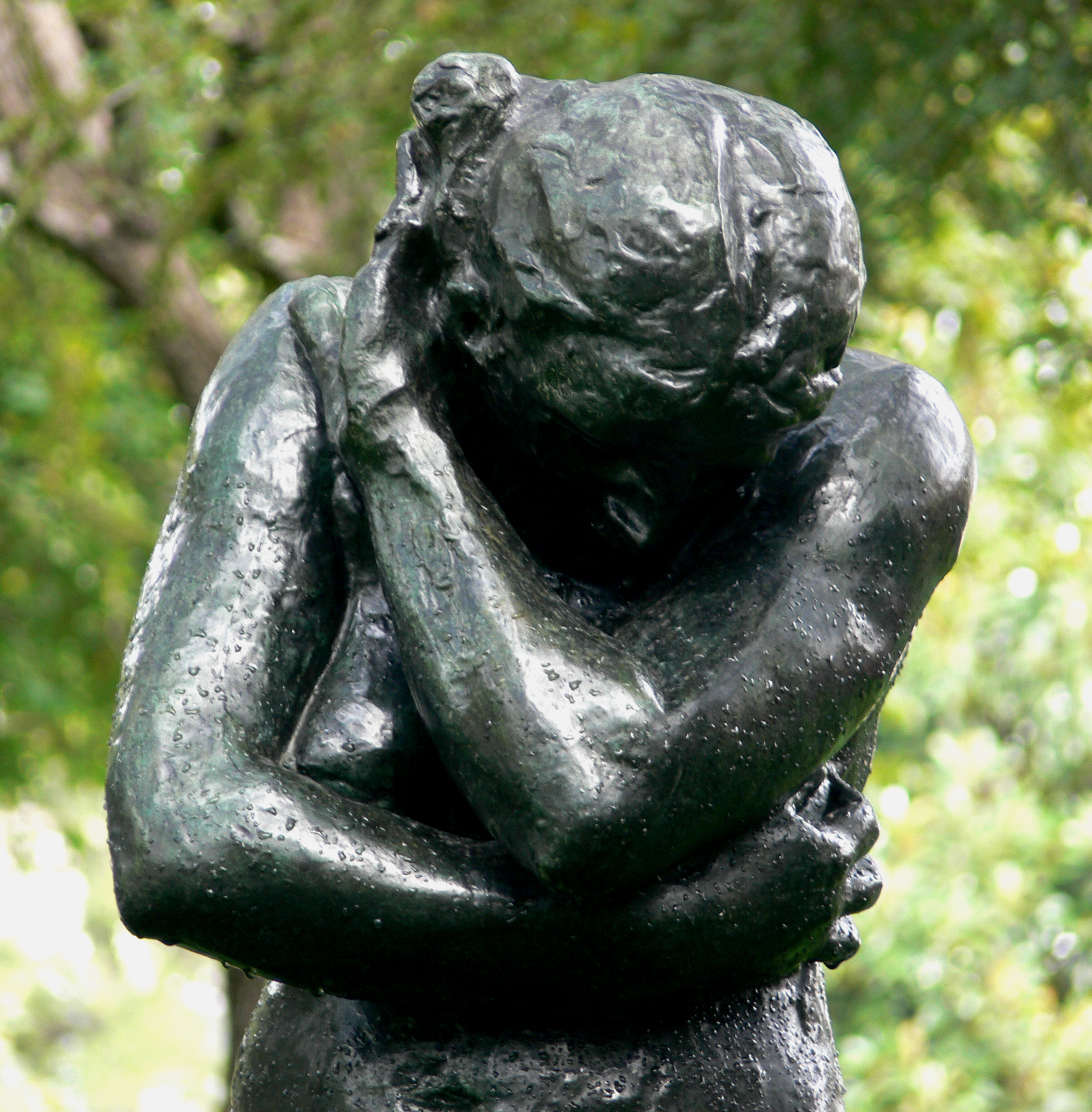
Though we spent less than an hour at the Joslyn Art Museum, it was meditative time well invested. Upon exiting the European art section, there was a small room containing a Monet painting and a small bronze statue of Auguste Rodin's Eve. Unlike many portrayals I have seen of Lady Eve, this one was not sensual nor was it sanitised. There she was, naked, with no hand covering her sexuality, no long hair hanging down to hide her womanhood; she hid only her face. Though she was bronze she was not brazen—contorted in remorse and agony for the curse she had unleashed upon mankind. When I gazed upon this mortified Eve, I saw fear and sorrow. I saw vulnerability. I saw humanity in the wake of the Fall. I saw the hope of repentance. I saw myself.


How can human hands take cold metal, making it live in ripples, effulgence, and emotion? How could the artist cast one woman who would resonate with so many of the women who gazed upon her abject form? Yet somehow, in broad strokes, Rodin made just such a woman. Eve in all her remorse and repentance was a woman—she was human. From this bitter moment of knowing sin, a veil was placed between God and man. 


From this time forth, humans began to hide—and we choose to hide behind much more than fig leaves and excuses. We hide behind our accomplishments or our identity, behind our careers, cars, or kids. We hide behind walls that we have built, brick by brick, barb by barb. We hide behind our intellect and our to-do lists, behind styles and having it all together, behind addictions and amusements—we hide because we are afraid. We are afraid that we aren't smart enough, handsome enough, or successful enough. We are afraid to let anyone see our mess, our turmoil, our uncertainties, our weaknesses and inabilities. And when our first emotion isn't fear, it is fear hidden under the guise of pride. We pride ourselves on our achievements or our brutal honesty or some other thing, in order to prove that we are enough, we are strong, we are worthy of love and acceptance, or at least of respect and awe.

What if we were like Eve, not hiding our humanity—for it is our glory, our being what we were made to be. What if we did not try even to turn our eyes away from our Maker in agony and ignominy? What if we recalled Isaiah's words, that our Maker is our Husband and that the Holy One is also our Redeemer (Isaiah 54:3)? What if He turned our faces toward Himself, sought our eyes with His, and called us His belovéd? There is no "what if?" about that—He does exactly that. From the very first He has pursued us. 


Beginning with Adam and Eve, in the cool of the evening the Lord sought them, He called out to them "where are you?" (Genesis 3:9). Adam answers the way I so often do, "...I was afraid, because I was naked, and I hid myself." (Genesis 3:10) "...I was afraid, because I was naked..." I was afraid to come to You, Lord, because You would see through my accolades, accomplishments, and intellect. I felt vulnerable and raw, so I didn't want to come before You. I have sinned and I couldn't wash it off. I want to fix myself before I come to You. Slowly, slowly I am learning that this is when He cups His hand under my chin and searches out my eyes. The searing Love in His own eyes burns away my impurities, illumines my darkness, heals my brokenness, makes me worthy. It isn't that there is no consequence for sin, there is. Yet it remains that the payment was made by the injured party. The One who covenanted with us is the One who paid the redemption price when we broke the covenant. The Holy One is our Redeemer.


Like Eve, I forget the kindness of God that leads to repentance and I can think only of His Holiness. I forget that His wrath is directed toward my sin, not my self, so I hide. I try to be fit enough, smart enough, encouraging enough, anything-else-enough-to-atone-for-myself—except being vulnerable enough, honest enough, and humble enough to come before Him. 


The irony in all my fears, in all my brokenness, is that I deeply want to be known—to have someone know me as I am and not walk away. Those great theologians, 
the Goo Goo Dolls, put it this way: And I don't want the world to see me/'Cause I don't think that they'd understand/When everything's made to be broken/I just want you to know who I am1. They understand the ache of every human being, the desire to be known—but also the fear of being known. We don't want the whole world to see us as we are, just the one person who will know us for ourselves and not run away. It is a scary thing to be vulnerable with another person. What if they betray you? What if they reject you? What if they take what they know about you and use it against you? That is the risk of love. A risk we fear and long to take, all rolled together.


Love is the risk God chose to take on mankind. He chose to create Adam and Eve, though He knew the Fall would happen. He chose to love them, even though He knew they would choose not to trust Him and would break the world He entrusted to them. He chooses to love us, even though we put up walls or try to win approval rather than receiving His gifts of love, reconciliation, and redemption. He chooses to love us, even though we often snatch gifts from His hand, yet run away from Him when we don't get our way. And even when we nail Him to a cross with our manifold sins, piercing Him to His very heart, He still loves us.


Perhaps I see less of myself in Eve after all—at least she stood before her maker in all her nakedness and sorrow. I run from my Maker in those moments, or try to cover myself with the flimsy fig leaves of my accomplishments and intellect. I ache to be known, yet I fear it. I want to be naked and unashamed before my Maker rather than clothing myself in my own attempts at being "enough".


“You come of the Lord Adam and the Lady Eve," said Aslan. "And that is both honour enough to erect the head of the poorest beggar, and shame enough to bow the shoulders of the greatest emperor on earth. Be content.2

O my Maker-Husband, let me be content in Your Love. Let me be vulnerable enough to come before You. Make me able to know that You are enough and that You make me worthy.


_______________


1. The Goo Goo Dolls, Iris (Written by John Rzeznik, Warner Bros. 1998)

2. Lewis, C. S., Prince Caspian (Scholastic Inc., New York, 1987) 211-212

All Scripture is taken from The Holy Bible, English Standard Version Copyright © 2001 by Crossway Bibles, a publishing ministry of Good News Publishers.

Saturday, August 8, 2015

Darkness Comes to Cudgel My Brain


The leaves of the oak tree glisten with rain
As Darkness comes to cudgel my brain
Tonight with fingers, clenched fists—
Probing, pummelling, heaping on shame,
Thick as ghost-fog and obscuring mists.

Birch boles are black in the shade,
Their creamy skin can only fade
Away, shrink away, hide from eyes
Ever-watching since the day they were made,
Swaying into the snare of the lies...

...Lies that enter the heart, rotting the core
Of the trees-turned-dark; of me, a whore
Inside—my mind, my heart—broken,
Fallen in love with myself, wanting more,
Always insatiable for a counterfeit token

Of love—which is only lust thinly masked,
Glossy outside, alluring as red wine, long-casked
And flowing free—with no thought of tomorrow
When the head-shattering pain remains, unasked,
And Darkness leaves in its wake only false sorrow

Which we call guilt, that cannot cover up lust
Any more than gilt leaf can make a bust
Pure gold all the way through, or trying hard
Can make us new; we can only rust
Under sin's corrosion, once innocent, now marred.

Tomorrow arrives, is today; and the heart-shattering 
Pain of disfiguring corruption is scattering
All faculties of feeling, of sorrow, of true shame
And the eruption of sin, full-fledged, isn't flattering—
I am excoriated, a shell, with only myself to blame.

Night drones on within, filling the hollow
With nought but shadows. Here I wallow
In self-pity and despair, I cannot heal
Myself, save myself—this is hard to swallow,
And know with my life, as I no longer feel

Alive, feel at all, or know repentance-giving-grief.
Inside, the Darkness flutters, kicks, seeks relief
In a wail, a cry for life-breath, for the burning
Spirit of Holiness to come as the thief
Who steals my heart, plunders me back, returning

Me to the rightful King of the world wide—
Eyes wide, as feeling returns with the Spirit inside
Of my fragile heart-shards—redemption is here.
Apathy drains out, life surges in to veins long denied
Its crimson tide by the strangling fingers of fear...
Of being found out, found wanting—ludicrous pride

Kept me locked in the gnawing, growing dark
That threatened to keep me trapped like a lark,
Caged. Enraged at my own selfish choices,
But powerless to save myself—the truth, stark—
I begged for mercy, "Yours." A Voice says...

My face is in His hands, turned toward His eyes,
I see them glistening with tears at my cries
For help, desperate though they were,
I couldn't get out of the dirt, I surmise,
Because I was so focussed on me, so sure

That I could do something to save my soul,
Yet always giving up or in, a wobbly foal
Unable to even stand on the legs given me
Without the Spirit's breath standing me whole
And upright—from Darkness I am made free...

"The Light, the Light!" I cry, covering my face,
Feeling crushed by glory's weight in the space
Of my small frame. The holy, searing Light
Is what I need for healing, soundness—both grace—
To fix what I cannot, to cure me from sin's bite.

Saturday, April 18, 2015

In a Glass Darkly


Have you ever seen a photo of yourself, or caught your reflection in a window and wondered, "Who is that person?" Sometimes I see my reflection in the mirror and I catch wisps of the flyaway, carefree girl that I am. Yet there are moments, usually in photographs, when I see the old soul inside of me. Hopefully that means I look wise and thought-full, rather than crinkled and worn down by cares. But I wonder... 

I remember not being very old, looking into the storm cloud blue eyes reflected back to me and realising I was the 'me' behind those eyes, the 'self' inside that little strawberry blonde head. I had that moment of knowing that I am myself. Sometimes we ourselves notice the way the light catches our eyes, or that fine lines are appearing where none lived before. A look we have never seen our pensive faces wear is reflected back in still water, or captured on film. For a moment we see the selves we are, we catch a glimpse of ourselves from an outside perspective.

The realisation, the knowing whisks away with a blink of our round eyes. I catch myself wondering, "Can we see rightly or are our eyes too fractured?" This question came to me first under the night sky. When I am upset or uncertain, I often look to the heavens to put myself in perspective. Planets shine strong in the darkness. Stars' light illumines my eyes and my heart as I breathe out prayers to their Maker and mine. In the nighttime all I see is shadow or—due to my astigmatism—light splayed, spilled, splitting in all directions.

Do my real eyes see reality, or only a fragmented reflection of what is real? Even the glasses I wear to right my vision do not fix the aberration that makes lights star out, especially at night. I hunger for the answer, to know if my real eyes see the world as it is. I hunger still more for the questions that arise when I stand small in the inky night. I want to see, to know, Beauty. I want to catch that pensive look of mine in a photo and be in wonder that that is me, the self I am. I yearn to be. I want to am (if one can break grammar rules in the desire to live ontology).

Saint Paul's words rise up in me; like a clarion call they ring and reverberate through my heart and mind: 'For now we see in a mirror dimly, but then face to face. Now I know in part; then I shall know fully, even as I have been fully known.' Or as another translation says: 'Now we see things imperfectly, like [fuzzy] reflections in a mirror, but then we will see everything with perfect clarity.' The Fall is like an astigmatism, distorting our view of reality, of God. Even putting on the glasses of God's word and seeing the world from His side does not change the fact that we live inside the brokenness of the Fall. We see more clearly, yet not perfectly. The edges waver and star, making us blink to clear our eyes. The constant hope before us is that the Fall's breach and fragmentation will one day be fully healed and made whole. As gloriously proclaimed by Saint Paul:
In my opinion whatever we may have to go through now is less than nothing compared with the magnificent future God has planned for us. The whole creation is on tiptoe to see the wonderful sight of the sons of God coming into their own. The world of creation cannot as yet see reality, not because it chooses to be blind, but because in God’s purpose it has been so limited—yet it has been given hope. And the hope is that in the end the whole of created life will be rescued from the tyranny of change and decay, and have its share in that magnificent liberty which can only belong to the children of God!

Saturday, November 22, 2014

Childlike. . .Wonder

Chill air makes me pull my covers closer just as my alarm buzzes. I roll over, swat my phone, and snuggle back under the blankets. Then I slit open one eye to see what the morning has brought. Suddenly I am all awake: the sky is grey, but the evergreens are shadowy jade, frosted with feather-flakes of snow. Snow! It is early this year, and cold, and...delightful. I can hear sleigh bells in my dreams, and though I am quick, I can never quite catch a glimpse of Jack Frost as he paints my windowpanes—which is a stunning feat, as I have a dozen panes before my desk.

My blood quickens at the thought of wandering out in those downy flakes, listening to the strange hush that snow always brings with it. My body is slower to answer the fairy calls—after all, covers are warm, the air in my house is decidedly not. After a good amount of standing by the heater, I am layered enough to sally forth into a world drenched in cold and quiet. There is wonder in the wintry wind. Magic laces the limbs of Old Man Cottonwood.

I stop on the bridge to watch the morning. Great puffs of snow shake off branches and glide into the stream. They are gone, liquid water once again, what moments before were airy snow-castles. The aching chill in my legs prods me to walk again. Still I watch the morning—the dancing snow, the plump little birds along my path—and I wonder about things. Do other people wonder about "things?" I wonder. I walk on, thinking of how the brown hedge next to me was teeming with living colour this Summer. How I clipped a lavender flower from it to wear in my hair. Do people my age wear flowers in their hair?

I question more and more whether I am an adult, or just a child inside an adult's body. Certainly I have learned some tact since childhood. Wait, is that tact, or have I learned to lie? Have I learned to gloss over something that I obviously see and am curious about? When does snow lose its magic and become merely an obstacle on the road? Do you become a grown-up when you step around a puddle rather than jumping in it? Does progress in years mean regress in seeing details like feathery finch bellies, pale peach against the snow? Does paying bills mean you stop chasing the rainbow's end? Does reality awaken us from our dreams?

The lenses of child-eyes have been mine for quite a long time. I think folks snicker at me sometimes after I walk by, wreathed in flowers or Autumn leaves. People often try to tell me that reality will burst my bubble; outlining various horrors, as if they are reality's servants, sent with sword in hand. One of my neighbours thinks I only appreciate happy endings, that I just pretend the Fall didn't happen, and that I need a dose of darkness to snap me out of fairy tales. Yet I realise that fairy stories have plenty of dark and morbid moments; many end unhappily-ever-after. I know the darkness of the Fall in my own heart and brain; in bitterness, betrayal, and broken bodies. I know Sorrow's shears, clipping off friendships that should have grown; snipping life out of loved ones, far too soon. It is always too soon, too young, too much...The Fall is too much with us.

The Fall is too much with us—should we shrink away in fear? Do we pretend it isn't real? No, that is a childish response, like hiding under the blankets from invisible night-fears. Thin quilts won't turn the blade of the Black Riders. What then is our defence? A heap of philosophy books to explain away the evil in the hearts of men? That is a cheap grown-up trick. Let us then be childlike—not childish—and revel in the fairy snows, walk so that we may see Beauty—rather than to burn calories. Let us know that the Fall happened, but not allow it to be the end of our stories. As Chesterton asserts, "Fairy tales do not give the child his first idea of bogey. What fairy tales give the child is his first clear idea of the possible defeat of bogey."1 Indeed, I need childlike faith that Smaug can be defeated—I already know that he exists. So for the Fall, I need to know it will one day finally and fully come untrue, because it daily threatens to undo me.

Yes, there is roadkill by the sidewalk, graffiti on the dumpster, and scraggly undergrowth along the river path where I walk. I do not deny these things. But there are majestic trees, glimpses of a snow-capped peak between branches, delightful bridges, and cheery little birds piercing the morning with sweet songs. It is Beauty that leads us to worship. Beauty, that restores sanity to our weathered souls. It is Beauty that turns our focus toward the One who made all things Beautiful in their time.2 That One is trustworthy and true, and He will make everything sad come undone one day...Interweaving myth into a Man and fairy stories into facts. 


  1. Chesterton, G. K., “The Red Angel” in Tremendous Trifles (New York: Dodd, Mead and Company, 1920) 130

Sunday, August 10, 2014

Only Human?


Imagine you are conversing with someone—a barista, the mailman, your mom, a close friend—and the conversation turns to an error that person made and they say, "Oh that mistake was a doozy! But I'm only human." They might even grin and shrug it away, chattering on as before. In fact, you may have made this very remark yourself at some point. If so, stop it. 

You and I are human beings. Our humanity is not an excuse—it is who and what we are. Not only human or merely human, but human in an of itself. As Aslan once explained, “You come of the Lord Adam and the Lady Eve... And that is both honour enough to erect the head of the poorest beggar, and shame enough to bow the shoulders of the greatest emperor on earth. Be content.”1

Be content—we were made in the image and likeness of God.2 As such, we are distinct from every other creature in existence. We were made to be fully human—that is not a flaw, it is our rôle. We do not need to become less human, but more. All persons are shattered by the Fall, torn to bits and fragments of humanity. We are often more capable of being inhumane (sub-human, if you like) than we are of being human. Restoration of humanity means being completely human.

Someone might  inquire, doesn't the Bible say that we should decrease and God should increase in us?3 How does that point to us needing to be more human not less? Perhaps that is a misinterpretation of John the Baptist's statement, yet it raises a worthy point. If we are made in God's likeness, then we should be like God. Where do we take cues on how to be more like God? In the person of Jesus Christ. Jesus was the fullness of God in human flesh, but He was also the fullness of humanity in that sun-scorched skin.

Colossians two says it this way: "For in Him [Christ] dwells all the fullness of the Godhead bodily; and you are complete in Him..."4 I swim in waters far over my head when I begin thinking of "the fullness of the Godhead", but there that fullness is, in the person of Jesus. Further, we are completed in Him, made full in Him. We do not contain the fullness of the Godhead, we are too finite for that—but we can become completely human in Christ. I leave you to wrestle with the Scriptures in how to become more like Christ. I tremble before the Spirit of God as He sets my fractured soul in a myriad of places. Being made whole hurts, but it is good. Let us be content in nothing short of being human.


_____________________

1. Lewis, C. S., Prince Caspian

2. Genesis 1:26 (NKJV)
https://www.biblegateway.com/passage/?search=Gen+1%3A26&version=NKJV

3. John 3:30 (NKJV)
https://www.biblegateway.com/passage/?search=John+3%3A30&version=NKJV

4. Colossians 2:9-10a (NKJV)
https://www.biblegateway.com/passage/?search=col+2%3A9-10&version=NKJV

Tuesday, June 10, 2014

Treading the Sea of Darkness

Noisy chatter clutters the lobby. The porch overflows with sound, seeping from every crevice of the hotel, like grapes, crushed. And I? I feel alone. Wearing the mask of a smile, while my soul wrestles with the Fall. I slip out into the rain-cooled air, the cloak of night hiding me from peering eyes and piercing laughter. 

How many times have I sat in a crowd of persons, even those I know, and felt the icy tentacles of loneliness? How often have I painted a smile on my lips, yet my eyes are belied by tears? Can I number the times I have listened to another's excitement while holding in my sorrows? How often have I concealed my joy in the face of someone else's pain? I do not begrudge those emotionally mixed moments. I do not regret that I have the privilege of of weeping and rejoicing with others. Nor am I deeply hurt that only a few look carefully into my honest eyes to see what is inside. Then I wonder, how many times have I not looked closely at bloodshot eyes? How often am I so lost in my own life that I neglect the trials and joys beneath the surface in others? 

This is the Fall–this neglect of others–written large and painted in bold black. The Fall, that locks us within ourselves, isolating us from God and man. The Fall, so murky and deep as to drown us in its depths. It is the Fall that prevents us from seeing life as a whole. We see only bits and pieces of our own lives—of others' lives—and we think those slivers are the whole story. We slosh in the muck of those black-sodden brushstrokes, seeing only a tary mess as far as our eye-scope can reach. 'This isn't how the story is supposed to go', we whisper fiercely to ourselves, kicking to stay afloat. 

But how is the story supposed to go? We think we have a decent plot. 'In the end this would bring God praise. Isn't that good? Isn't that the goal?' We do not see that the darkness of sin has been made the paint for the brush, the ink for the pen. The viscous stream in which we are drowning is the ink, undried. All the harrowing horrors of the Fall that dig their claws into our hearts, our homes, and our heroes have been ground into charcoal-hued pigment, brushing letters on parchment. Our grandiose plots for how our story should go are so small they are invisible upon the page. We swim in the depths of merely one letter, thinking it is our entire story. The Author and Finisher of our faith sees our script from the right perspective, much bigger–yet humbler–than we ever dared to dream or hope. 

Just because God allows us to be free agents in the writing does not mean that we are the author. Though He gives us the intolerable compliment of using our hands, our lips to accomplish His purposes, it does not follow that we know how immense the story, how deep the brokenness–and deeper still the redemption. We do not know how those letters, words, paragraphs, plots and subplots are being woven together to form a far-reaching tale. A true tale, meant for all the world, not only our corner of it, in this place and time.

What about the days when the narrative is dark, when we have tread the turbid waters of the Fall so long that we cannot muster another kick? Will the waves overflow us after all? God forbid! I say this fervently, yet, I am not the one abandoned by my husband. I am not left fatherless. I am not the one cast out by my family for doing the right thing. I do not have to face the long road of loneliness ahead if no reconciliation comes. No, but I can walk alongside my friends in those dark places. When they cannot tread thick waters any longer, I can hold them and swim for them. When I tire, it will be another's turn to support them. This is the body of Jesus, working together toward whole-ness, toward holiness. This one dark letter is not all that is on the page, it is not the whole story, though we or others may stick fast in one place far longer than we thought possible.

I still want to hide the holes in my soul, punctured by the Fall. I want to hide my own sin. I want to run away from the pain that the sins of others have caused me, my family, and my friends. I want life to be full of good things that are delightful and do not wound. But what I need it not to hide, is not isolation. What I need—what we all need—is for 'the light to shine in the darkness, and the darkness not [to] overcome it.' We all need times of solitude, not to forsake others, but times before God in honest conversation, times away to draw us back into the body of believers, toward holiness. Sin separates, it is said. Let us be reconciled to God through Jesus Christ, then. Let us reconcile others to God by walking with them in their darkness—even when the journey is years long and the dawn is far, far off. May the light of Truth shine all over the darkness, making the Author's story—so much bigger than what we planned or imagined—visible to the watching world.

Lost, lost are all our losses;
Love set forever free;
The full life heaves and tosses
Like an eternal sea!
One endless story!
One poem spread abroad!
And the sun of all our glory
Is the countenance of God.*


~ Johanna


___________________


* George MacDonald, 5th Hymn to the Night


Thursday, May 8, 2014

Love Will Have the Final Word: Jason Gray


When Jason Gray's ‘Love Will Have the Final Word’ came out, I had been listening to his previous album ‘A Way to See in the Dark’ on constant replay for about a month. I didn't think any other set of songs could really express my own steps in life better than that record… I was wrong.

When the song ‘Not Right Now’ came on, all I could do was sit there with wet eyes and a raw heart. Finally, someone who understood that Christians need to grieve. Not every song or story ends happily or quite the way we might want. Oh, God’s story ends better than the beginning – of that I am firmly convinced… Just, our stories have loss and pain and we don’t need happy-go-lucky pat answers. We need a place to grieve. We sometimes need our friends to shut up and sit down in the ashes with us.


Every song on the new album expressed the reality of brokenness, the depth of re-creation, the aching need for real friendship, and much, much more. I have never heard such a real, painful, hopeful set of songs that express the fall and redemption so powerfully and beautifully. 


~ Johanna

Saturday, May 25, 2013

Is Nothing Wasted?


They cut down half the tree at the first turn on the trail up to Red Mountain. It was an aspen or poplar of some sort, and I had had many a thought whilst gazing upon it. Half of the tree is clothed in green leaves, but the other half was mostly dead and bare. 

The juxtaposition of life and death had snatched my attention several times on that hike. Sometimes reminding me to be thankful for the beauty of life when seen in the shadowy presence of death. Sometimes it reminded me that I am like that tree - full of life where God has come in, yet plenty of dead branches of sin still needing to be removed.

When I saw that the dead half of the tree had been chopped down, my first response was to check the tears rising in my eyes. Why should I be sad that someone removed a tree that was sapping life from the living half? Would I be sad if God just cut out all of my sinful deadness and removed it? No, that is ridiculous. I rejoice when He clears out the deadness inside. But sometimes -- always, I think -- it hurts when He prunes away my sin.

Sometimes we must endure unbearable hurt. We must recall that pain is not always a result of our own sin. All sorrows and hurts can be used for our good, though I cannot always remember that when I am walking through the depths of the valleys. 

Today has been one of those days where I want to bear someone else's pain, but I cannot -- it is too much for me, and it does not alleviate them. When I looked out over the city from the foothills tonight, I realised that the hurt I feel for my friend, though it seems crushing to me, is only the hurt of one person amongst those thousands. One hurt among the billions across the globe. I cried out to God, asking how He could possibly bear the brokenness that fills His world. Then I walked home past that brokenness. And it revolted me, rather than melting me, which I think sin ought to do. Yet I want to move beyond the repulsion to the point where I can lift broken things up to God, the only Redeemer and Re-creator.

The Lord reminded me several times tonight that He is making things not like they were, but better than they were. He is not only restoring us and the whole world, He is re-creating us. There is hope, beyond those darkest moments, most vile atrocities, and heart-shattering pains. How do I know? Because one day it was true to say that God was dead, and we killed Him. Because He became our sin, and His own Father turned His face away from Him. Then He turned death upside down. And one day, He will do that for us, too.


The hurt that broke your heart
And left you trembling in the dark
Feeling lost and alone
Will tell you hope's a lie
But what if every tear you cry
Will seed the ground where joy will grow

And nothing is wasted
Nothing is wasted
In the hands of our Redeemer
Nothing is wasted

It's from the deepest wounds
That beauty finds a place to bloom
And you will see before the end
That every broken piece is
Gathered in the heart of Jesus
And what's lost will be found again

When hope is more than you can bear
And it’s too hard to believe it could be true
And your strength fails you half way there
You can lean on me and I’ll believe for you
Give it time, you will believe it too

Nothing is wasted
Sometimes we are waiting
In the sorrow we have tasted
But joy will replace it
Nothing is wasted
In the hands of our redeemer
Nothing is wasted


~ Johanna